
 Pin It
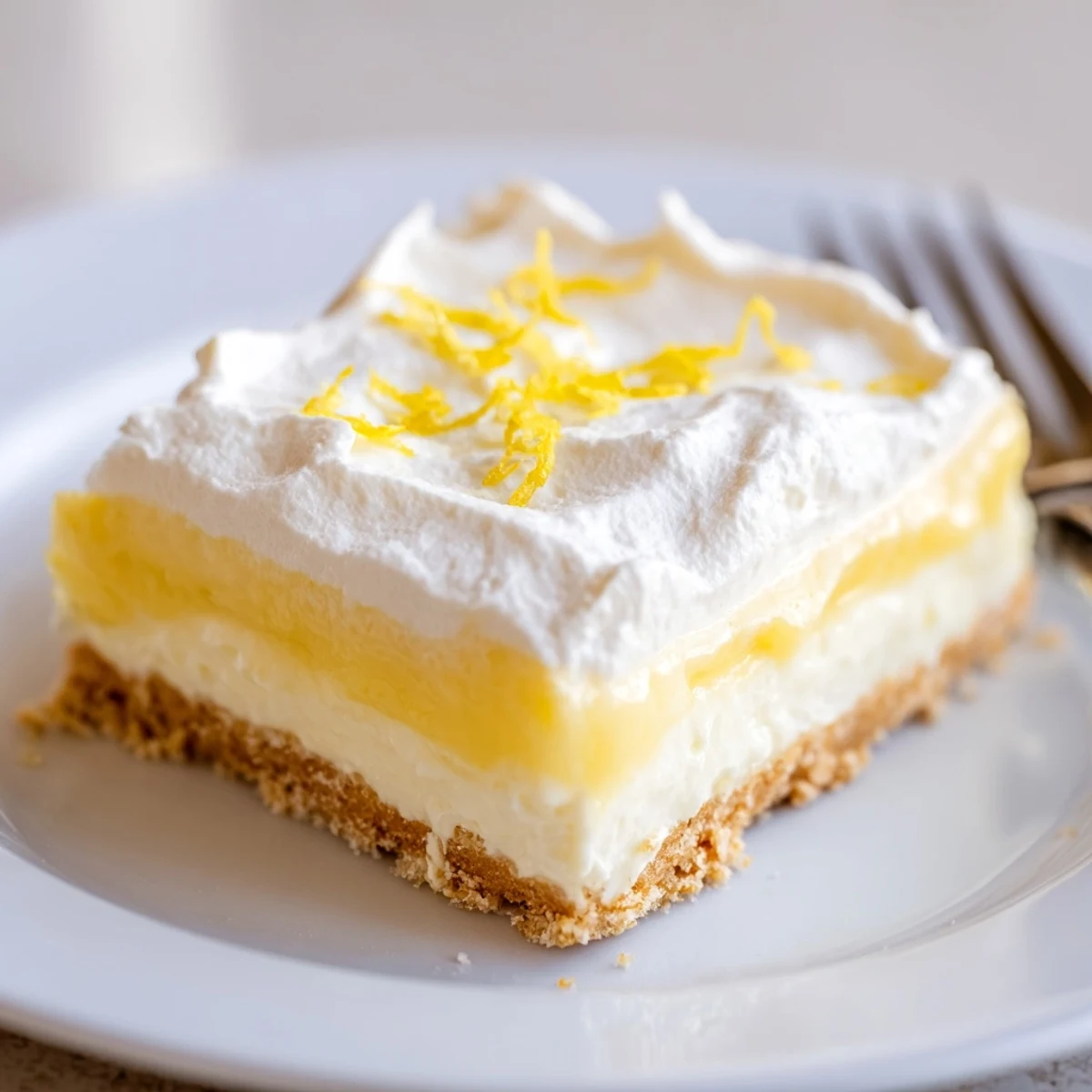
 In this lemon lush cake, a buttery cookie crust is pressed and baked until light golden, then topped with a smooth cream cheese layer. A quick lemon pudding layer is whisked and spread, followed by a cloudlike whipped topping. Chill at least two hours to set the layers; garnish with fresh lemon zest. Serves 12; hands-on time about 30 minutes.
My neighbor brought over a bag of lemons from her tree last June, and I stood in the kitchen squeezing one after another just to smell them on my fingers. That afternoon this lemon lush cake was born out of sheer citrus obsession, and now my neighbor drops off lemons with a knowing grin every summer. The layers look fussy but come together with almost no effort, which is exactly the kind of trick I love pulling on dinner guests. It disappears in minutes every single time.
I made this for a backyard barbecue where three people asked for the recipe before they even finished their plates. My friend David stood over the pan with a fork and said he was not sharing, which is honestly the highest compliment I have ever received.
Ingredients
- All-purpose flour (1 cup, 120 g): Forms the buttery shortbread base that holds everything together without getting soggy.
- Unsalted butter (1/2 cup, 115 g), softened: Use good butter here because the crust flavor depends entirely on it.
- Powdered sugar (1/4 cup, 30 g, for crust): Adds just enough sweetness to the base without making it crisp like a cookie.
- Cream cheese (8 oz, 225 g), softened: The middle anchor layer, so let it sit out until truly soft or you will fight lumps.
- Powdered sugar (1 cup, 120 g, for cream cheese layer): Blends into the cheese for a silky sweet contrast to the tart lemon.
- Whipped topping (1 cup, 240 ml, for cream cheese layer): Folds in to keep the cream cheese layer light and spreadable rather than dense.
- Instant lemon pudding mix (1 package, 3.4 oz, 96 g): The shortcut that makes this recipe work without cooking a custard from scratch.
- Cold milk (2 cups, 480 ml): Activates the pudding and creates that jiggly bright layer everyone loves.
- Fresh lemon juice (2 tbsp, 30 ml): Boosts the pudding with real citrus punch that boxed mix alone cannot deliver.
- Whipped topping (2 cups, 480 ml, for topping): The cloud like finish that makes every slice feel like a celebration.
- Lemon zest (optional, for garnish): Never skip this because those tiny golden flecks make people smile before they even take a bite.
Instructions
- Build the buttery crust:
- Heat your oven to 350°F (175°C). Combine the flour, powdered sugar, and softened butter in a bowl and mix until everything looks like wet sand. Press it firmly and evenly into a 9x13 inch baking dish and bake for 12 to 15 minutes until the edges turn a gentle gold, then let it cool completely.
- Whip up the cream cheese layer:
- Beat the cream cheese alone until perfectly smooth with no cold lumps hiding in the corners. Add the powdered sugar gradually, then gently fold in the whipped topping until you have a fluffy cloud of sweetness. Spread this evenly over your cooled crust and take a moment to admire that first beautiful layer.
- Create the lemon sunshine middle:
- Whisk the pudding mix, cold milk, and fresh lemon juice together for two to three minutes until you feel it thicken under your whisk. Pour and spread it gently over the cream cheese layer without pressing down and ruining that creamy boundary.
- Top and chill patiently:
- Spread the remaining whipped topping over the lemon layer in smooth swoops. Refrigerate for at least two hours though overnight is even better, then scatter lemon zest across the top right before serving.
 Pin It
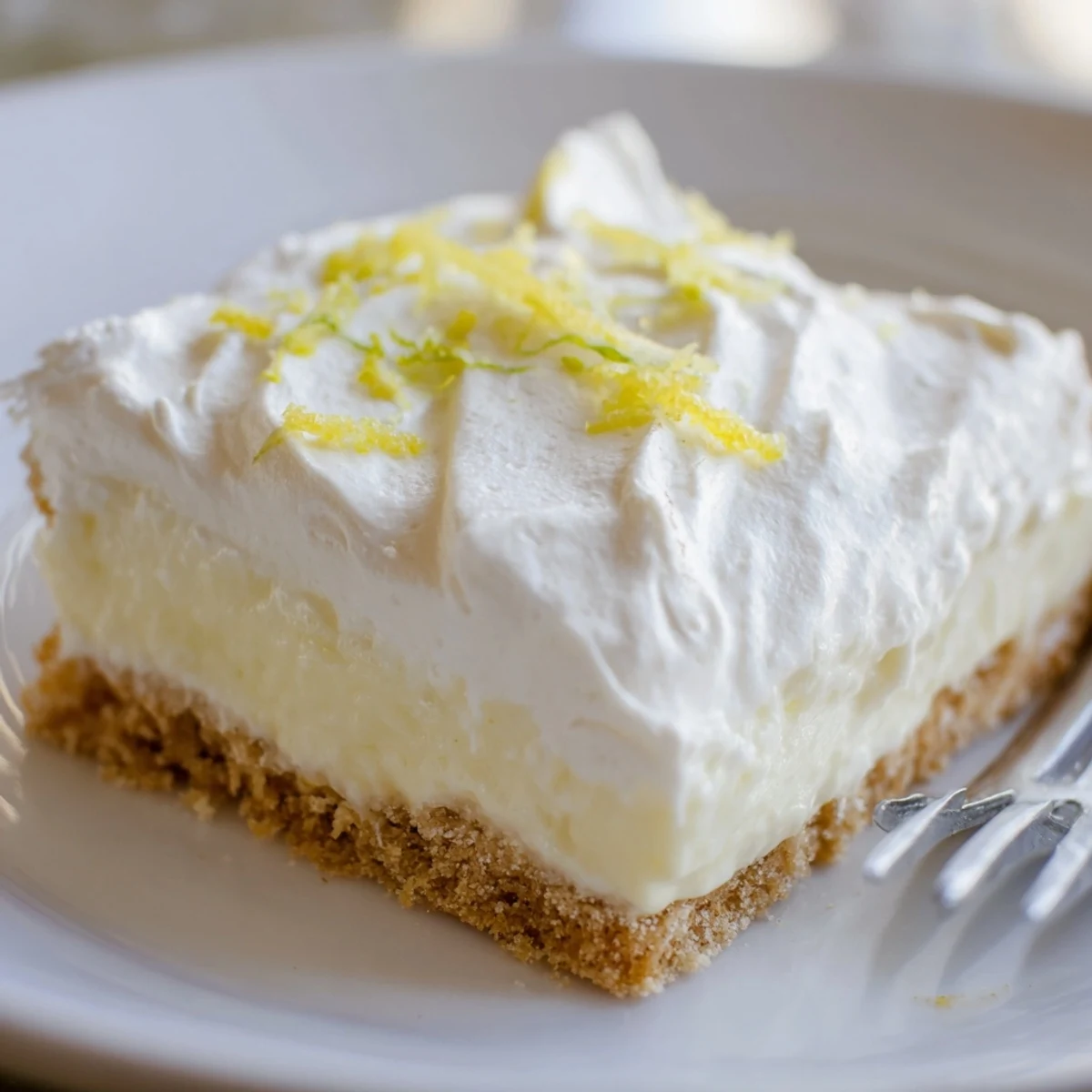
 The moment that first slice pulls away clean with all three layers showing is pure kitchen magic. I always stand there holding the server like a trophy before anyone is allowed to touch it.
When to Serve This
This cake belongs at every warm weather gathering from Memorial Day through Labor Day. It also rescues any potluck table that is heavy on brownies and chocolate chip cookies because the lemon cuts through all that richness beautifully.
Swaps That Actually Work
Crushed shortbread cookies make an incredible crust substitute if you want something richer than the flour butter base. You can also swap the lemon pudding for key lime if you are feeling rebellious, though I will always come back to the classic.
Getting Ahead and Storing
This is the rare dessert that is genuinely better the next day, making it a dream for anyone who likes to prepare ahead. It keeps well covered in the refrigerator for up to four days.
- Cover tightly with plastic wrap so the whipped topping does not absorb fridge odors.
- Freeze individual slices wrapped in foil for up to one month for a sneaky treat later.
- Always add the lemon zest garnish right before serving so it stays bright and fragrant.
 Pin It
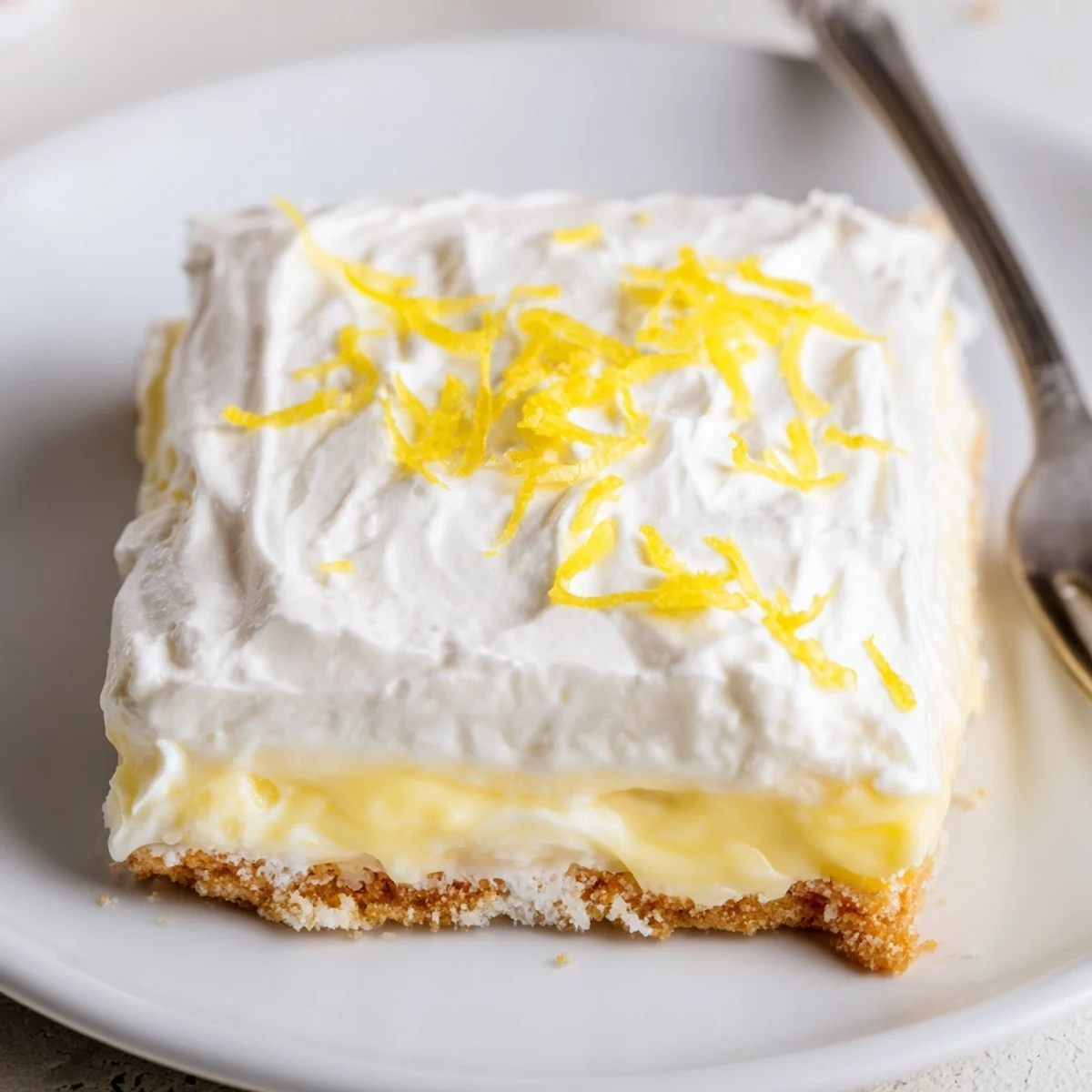
 Every time I make this cake I think of that sunny kitchen covered in lemon rinds and flour dust, and I smile. Some recipes just become part of your story without planning it.
Recipe FAQs
- → How long should the crust be baked?
-
Bake the pressed crust at 350°F (175°C) for 12–15 minutes until lightly golden; allow it to cool completely before layering to prevent sogginess.
- → Can I use fresh lemon curd instead of the pudding layer?
-
Yes—fresh lemon curd adds intense citrus flavor and a silkier texture, but it may require longer chilling to firm up. Taste and adjust sugar if needed.
- → What is the best way to get a smooth cream cheese layer?
-
Beat softened cream cheese until very smooth before adding powdered sugar, then gently fold in whipped topping to keep the layer light and even when spreading.
- → How long should the assembled dish chill?
-
Chill at least two hours, preferably overnight, so the pudding and cream layers set fully and slices hold clean edges when cut.
- → Can I substitute the crust for cookies?
-
Yes—finely crushed shortbread or graham crackers mixed with melted butter make a richer, crumbly crust. Press firmly and bake briefly for structure.
- → How should leftovers be stored?
-
Cover and refrigerate leftovers for up to 3–4 days. Keep chilled to maintain texture; avoid freezing, as whipped layers may separate on thawing.