
 Pin It
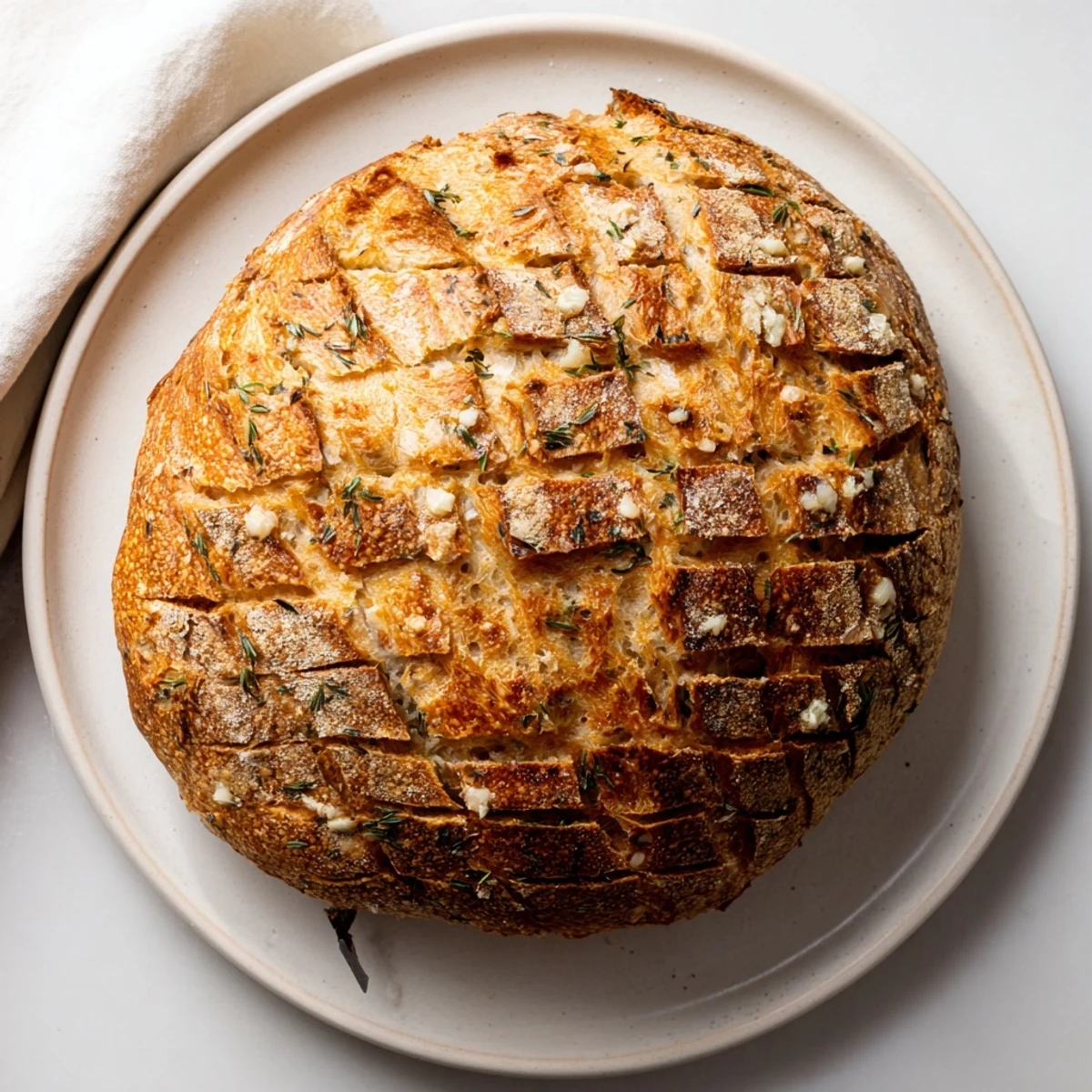
 This artisan-style bread combines the earthy warmth of minced garlic with fragrant fresh rosemary, thyme, and parsley. The Dutch oven creates the perfect steamy environment for developing that coveted crispy, golden crust while keeping the inside tender and airy. With just 20 minutes of active prep time, this loaf transforms simple pantry staples into bakery-quality bread that's perfect alongside soups, salads, or simply slathered with butter.
The first time I made garlic bread in a Dutch oven, I forgot to score the top and it burst open in the most beautiful, wild way. My kitchen smelled like an Italian bakery, and my roommate wandered in from her room asking what kind of magic was happening in the oven. We ate half the loaf standing at the counter, slathering it with butter while it was still too hot to touch. That messy, imperfect loaf taught me that bread baking is more about the journey than the aesthetics.
Last winter, I made this bread for a dinner party and accidentally doubled the garlic. Nobody complained. In fact, my friend Sarah asked for the recipe before shed even finished her first slice, and now she makes it every Sunday for meal prep. Theres something so grounding about the rhythm of kneading dough and knowing youre creating something that will bring people together.
Ingredients
- 3 ½ cups bread flour: Higher protein content than all purpose flour gives this bread structure and that satisfying chewy texture
- 1 ½ teaspoons salt: Enhances all the flavors and helps control yeast activity
- 1 teaspoon sugar: Feeds the yeast and helps with browning
- 1 packet active dry yeast: The magic that makes everything rise and creates those beautiful air pockets
- 1 ½ cups warm water: Should feel like bath temperature, around 110°F, to activate yeast without killing it
- 2 tablespoons olive oil: Keeps the dough tender and adds subtle richness
- 4 cloves garlic, minced: Fresh garlic mellows beautifully during baking, becoming aromatic rather than sharp
- 1 tablespoon fresh rosemary: Piney and resinous, rosemary stands up well to the heat of baking
- 1 tablespoon fresh thyme: Earthy and subtle, it rounds out the herbal notes without overwhelming
- 2 tablespoons fresh parsley: Bright and fresh, it adds a pop of color and gentle flavor
- 2 tablespoons melted butter: Brushed on after baking for that irresistible, golden finish
Instructions
- Mix the dry foundation:
- Whisk together bread flour, salt, and sugar in a large bowl until combined, then stir in the yeast
- Bring it together:
- Pour in warm water and olive oil, stirring with a wooden spoon until a shaggy, sticky dough forms
- Add the aromatics:
- Fold in minced garlic and all those chopped herbs until speckled throughout the dough
- Let it rise:
- Cover the bowl and let it rest at room temperature for about 2 hours until doubled in size
- Shape with intention:
- Turn the dough onto a floured surface and gently tuck the edges underneath to form a round loaf
- Rest and prepare:
- Place on parchment paper, cover loosely, and let rest 30 minutes while heating your Dutch oven at 450°F
- Create the steam chamber:
- Carefully lower the dough into the hot Dutch oven using the parchment as a handle
- Score and cover:
- Make a shallow slash across the top with a sharp knife, then cover with the lid
- Bake covered:
- Cook for 30 minutes to steam and create that gorgeous oven spring
- Uncover and finish:
- Remove the lid and bake 15 to 20 more minutes until deeply golden and sounding hollow when tapped
- Finish with butter:
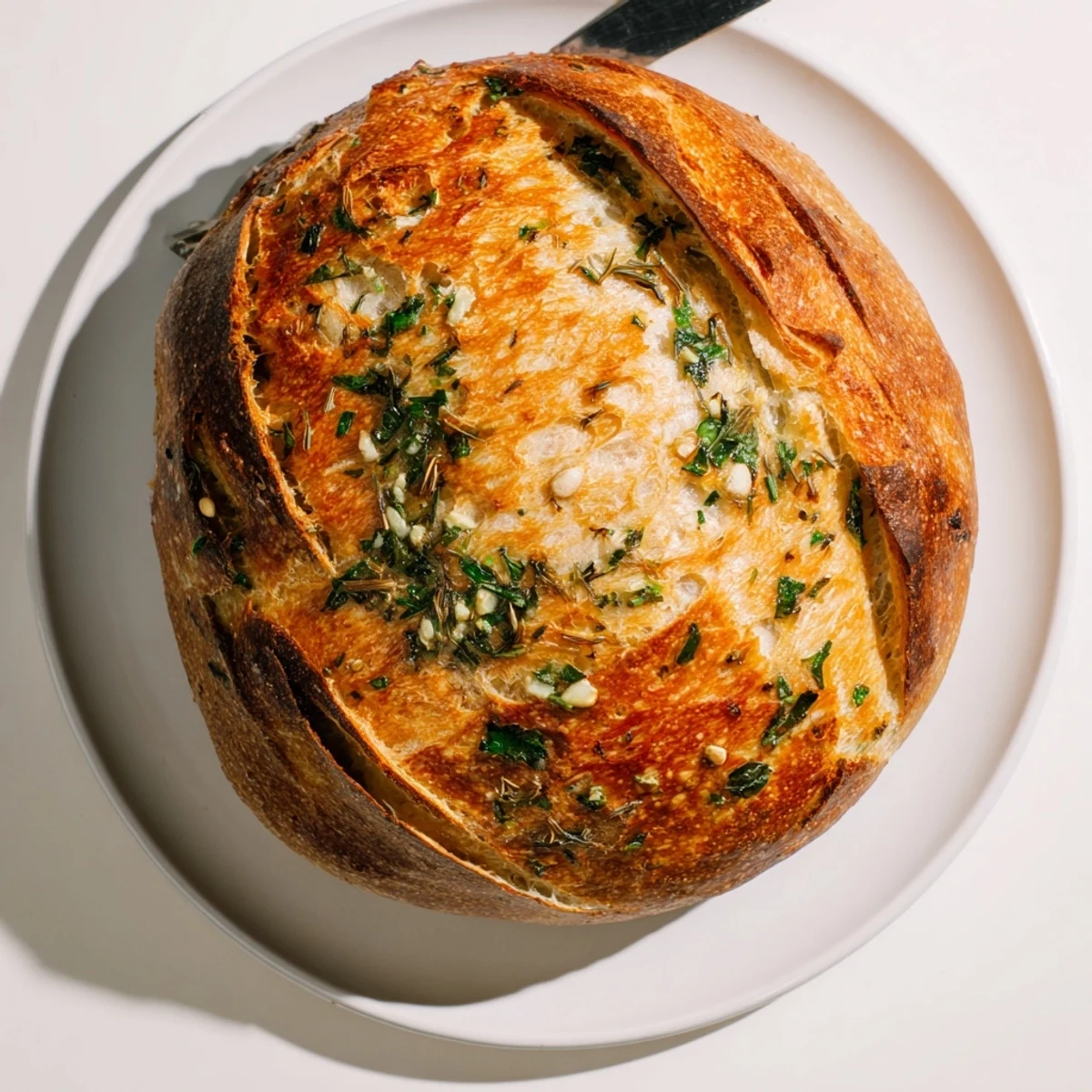
- Brush immediately with melted butter and sprinkle with extra parsley while still warm
 Pin It
 My mom always said that the smell of baking bread is the most welcoming thing you can do for someone entering your home. When I pull this loaf from the oven, garlic and herbs perfuming the air, I finally understand what she meant. Its not just dinner. Its an invitation to slow down.
Getting The Rise Right
Room temperature matters more than you think. If your kitchen is particularly cool, that first rise might take longer than 2 hours, and thats completely fine. The dough is ready when a finger pressed gently into it leaves an impression that slowly fills back in.
Herb Variations I Love
Sometimes I swap in fresh chopped oregano or basil, especially in summer when my herb garden is exploding. Dried herbs work in a pinch, but use about one third the amount since theyre more concentrated. Just remember that dried herbs need a little longer to rehydrate in the dough.
Serving And Storage
This bread is best eaten the day its made, when the crust is at its crispest and the interior is still tender. Leftovers can be wrapped in foil and gently reheated in a 350°F oven for about 10 minutes.
- Slice with a serrated knife in a gentle sawing motion to preserve the crust
- Wrap any leftovers tightly in foil after theyve completely cooled
- Day old bread makes incredible croutons or breadcrumbs for future recipes
 Pin It
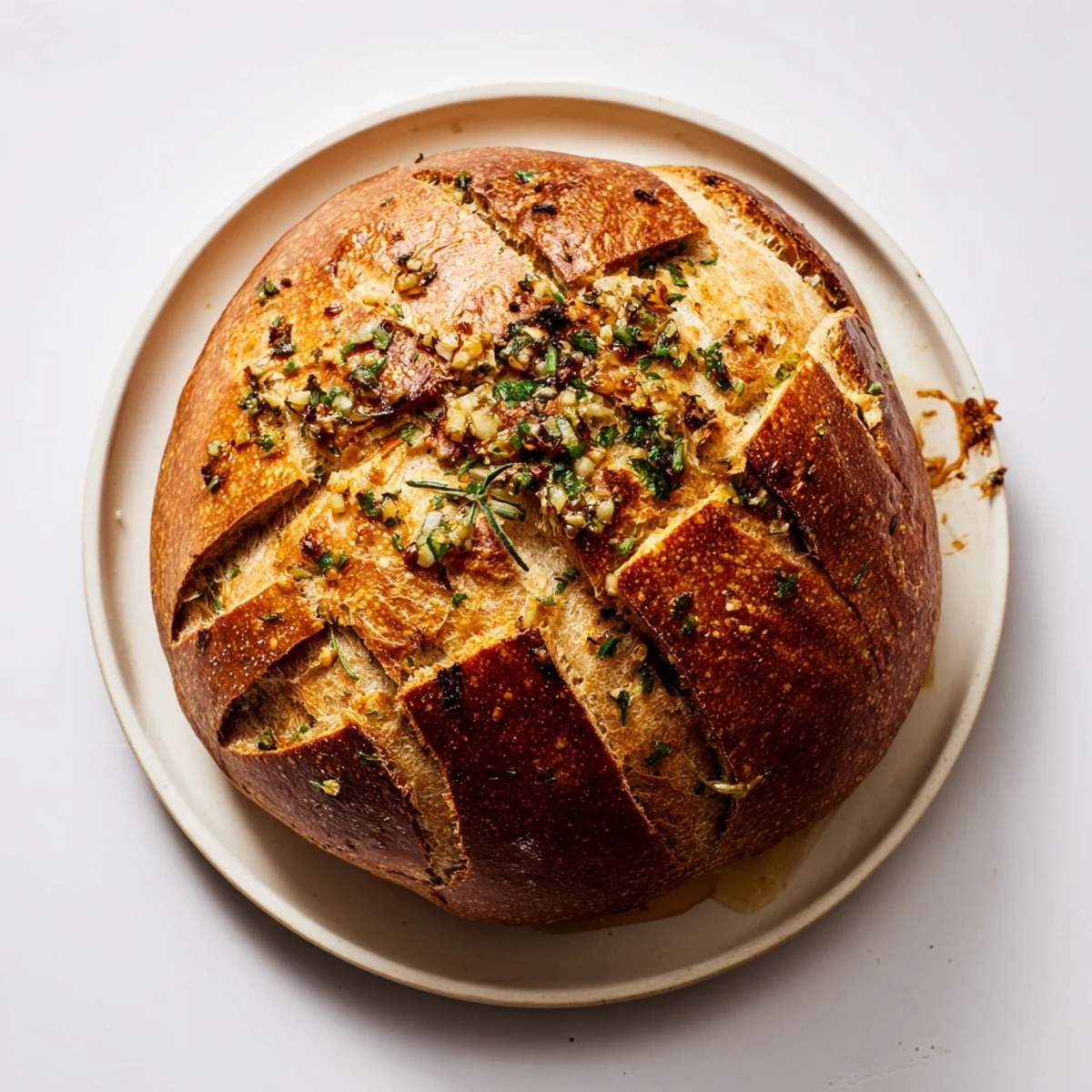
 Theres something profoundly satisfying about making bread that looks and tastes like it came from a professional bakery. Serve this warm with a bowl of soup, and watch people eyes light up.
Recipe FAQs
- → Can I use dried herbs instead of fresh?
-
Yes, substitute dried herbs using 1 teaspoon of each instead of the tablespoon amounts for fresh. The flavor will be slightly more concentrated, so adjust to taste.
- → Why bake bread in a Dutch oven?
-
A Dutch oven traps steam during baking, creating a professional-style crust that's crispy and golden. The enclosed environment mimics commercial steam-injected ovens used by artisan bakers.
- → How do I know when the bread is done?
-
The crust should be deep golden brown, and the loaf should sound hollow when tapped on the bottom. An instant thermometer inserted into the center should read 200°F (93°C).
- → Can I freeze this bread?
-
Absolutely. Wrap cooled bread tightly in plastic wrap, then foil, and freeze for up to 3 months. Thaw at room temperature and refresh in a 350°F oven for 10 minutes.
- → What if I don't have a Dutch oven?
-
Use a heavy oven-safe pot with a tight-fitting lid, or place a metal baking pan on the lower rack filled with boiling water to create steam while baking on a stone or baking sheet.