
 Pin It
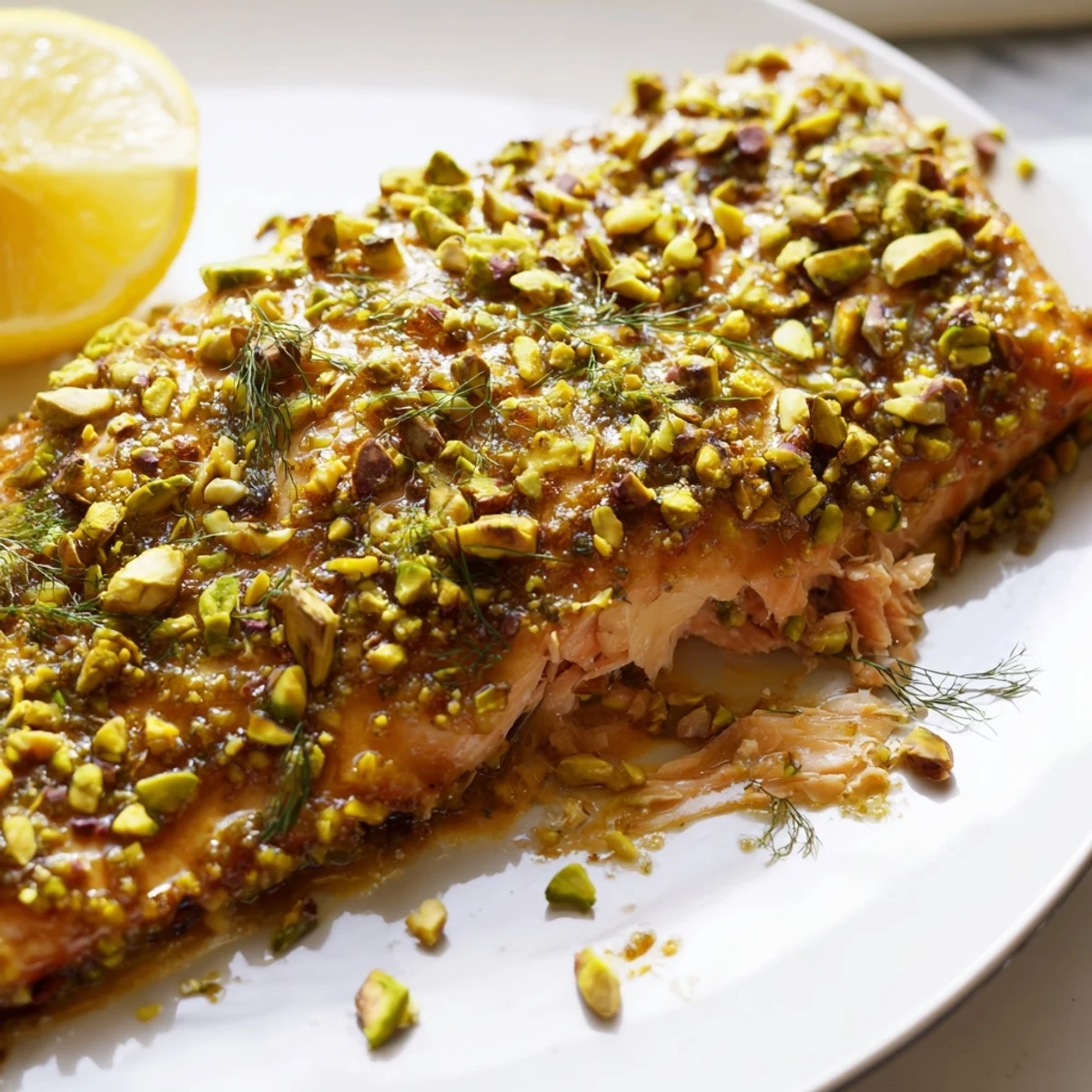
 This maple pistachio salmon brings together the rich, buttery texture of oven-baked salmon fillets with a sweet maple-mustard glaze and a satisfyingly crunchy pistachio topping.
Ready in just 30 minutes with minimal prep, it's an effortless dish that feels special enough for entertaining yet simple enough for a Tuesday night dinner.
The combination of pure maple syrup, whole-grain mustard, and fresh lemon creates a balanced glaze that caramelizes beautifully in the oven, while the chopped pistachios add a nutty, golden crust.
The sizzle of salmon hitting a hot baking sheet is one of those sounds that instantly makes a kitchen feel alive, and on a rainy Tuesday last March, that sound saved my entire evening. I had stumbled home drained from work, craving something that felt luxurious but demanded almost nothing from me. The maple syrup was sitting next to the coffee maker, the pistachios were leftover from a holiday baking binge, and twenty minutes later I was eating like royalty at my own kitchen counter.
I made this for my neighbor Carol after she helped me jumpstart my car in a snowstorm, and she stood in my doorway holding the plate with both hands, refusing to leave until she watched me write down the recipe on a napkin.
Ingredients
- 4 salmon fillets (about 150 g each): Skin on or off works, though skin on holds the fillet together beautifully during baking and crisps up underneath.
- 3 tbsp pure maple syrup: Use the real thing, not pancake syrup, because the fake stuff burns and tastes flat against the fish.
- 2 tbsp whole grain mustard: The little seeds in whole grain mustard add texture and a mild heat that balances the sweetness perfectly.
- 1 tbsp fresh lemon juice: Just enough brightness to keep the glaze from tipping into dessert territory.
- 1 cup unsalted pistachios, shelled and roughly chopped: Rough chopping is key, too fine and you lose the crunch, too large and the pieces fall off.
- 1 tsp fresh thyme leaves (or 1/2 tsp dried): Thyme whispers rather than shouts, which is exactly what this dish needs.
- Salt and freshly ground black pepper: Season the fish before glazing so every layer has flavor.
- Lemon wedges and fresh dill or parsley (optional): A final squeeze at the table wakes everything up.
Instructions
- Get the oven hot:
- Preheat to 200 degrees C (400 degrees F) and line a baking sheet with parchment paper so cleanup is effortless.
- Prep the salmon:
- Pat the fillets dry with paper towels, lay them skin side down on the sheet, and season with salt and pepper while you mix the glaze.
- Whisk the glaze:
- Stir together the maple syrup, mustard, and lemon juice in a small bowl until it looks like liquid amber, then brush it generously over each fillet.
- Build the crust:
- Toss the chopped pistachios with thyme in a bowl and press the mixture onto the glazed surface of each fillet with gentle, firm pressure so it sticks.
- Bake until golden:
- Slide the sheet into the oven for 14 to 18 minutes, watching for the pistachio topping to turn golden and the salmon to flake easily when pressed with a fork.
- Rest and serve:
- Let the fillets sit for 2 minutes out of the oven, then serve with lemon wedges and a scatter of fresh herbs if you have them handy.
 Pin It
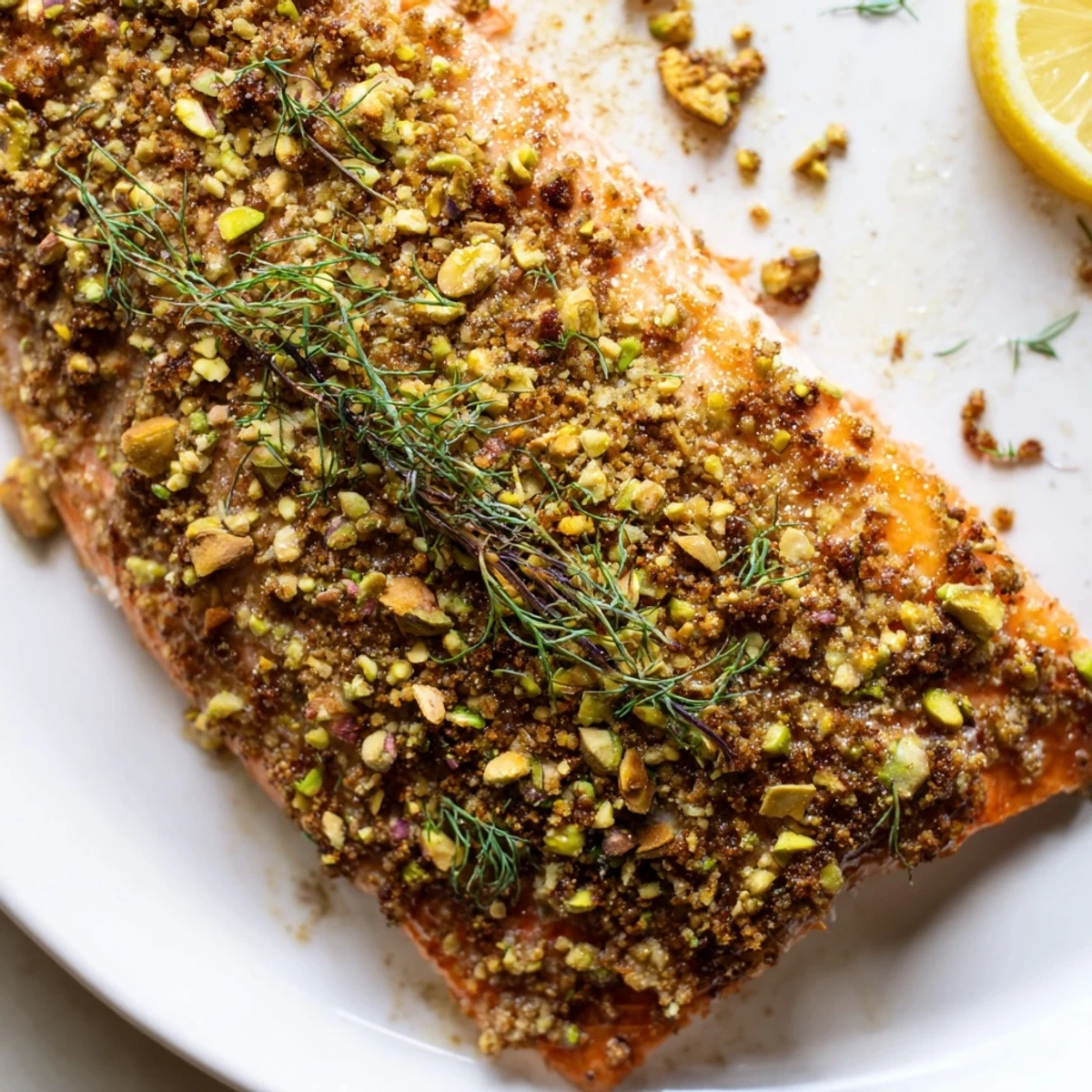
 There is something deeply satisfying about pulling a tray of golden crusted salmon from the oven when the alternative was ordering takeout.
What to Serve Alongside
Wild rice is my go-to because the nutty flavor mirrors the pistachios, but a bed of quinoa or a simple arugula salad with olive oil and lemon works just as well. On nights when I want something starchy and comforting, roasted sweet potatoes cut into wedges roast on a second sheet pan at the same temperature.
Swaps That Actually Work
Honey steps in beautifully for maple syrup if your pantry runs dry, though the flavor tilts slightly more floral. Pecans or walnuts replace pistachios without complaint, and I once used Dijon instead of whole grain mustard in a pinch, which gave a smoother, sharper glaze that was delicious in its own way.
Storing and Reheating
Leftovers keep well in the fridge for up to two days, though the pistachio crust softens overnight which is fine for flaking the salmon over a salad the next day. I have never successfully frozen this dish because the topping loses its crunch, so plan to eat it fresh.
- Reheat gently in a 160 degree C oven for 8 minutes rather than microwaving, which makes the fish tough.
- Flake cold leftover salmon over a grain bowl with whatever vegetables are hanging around.
- Always check for pin bones before baking, even with supposedly boneless fillets.
 Pin It
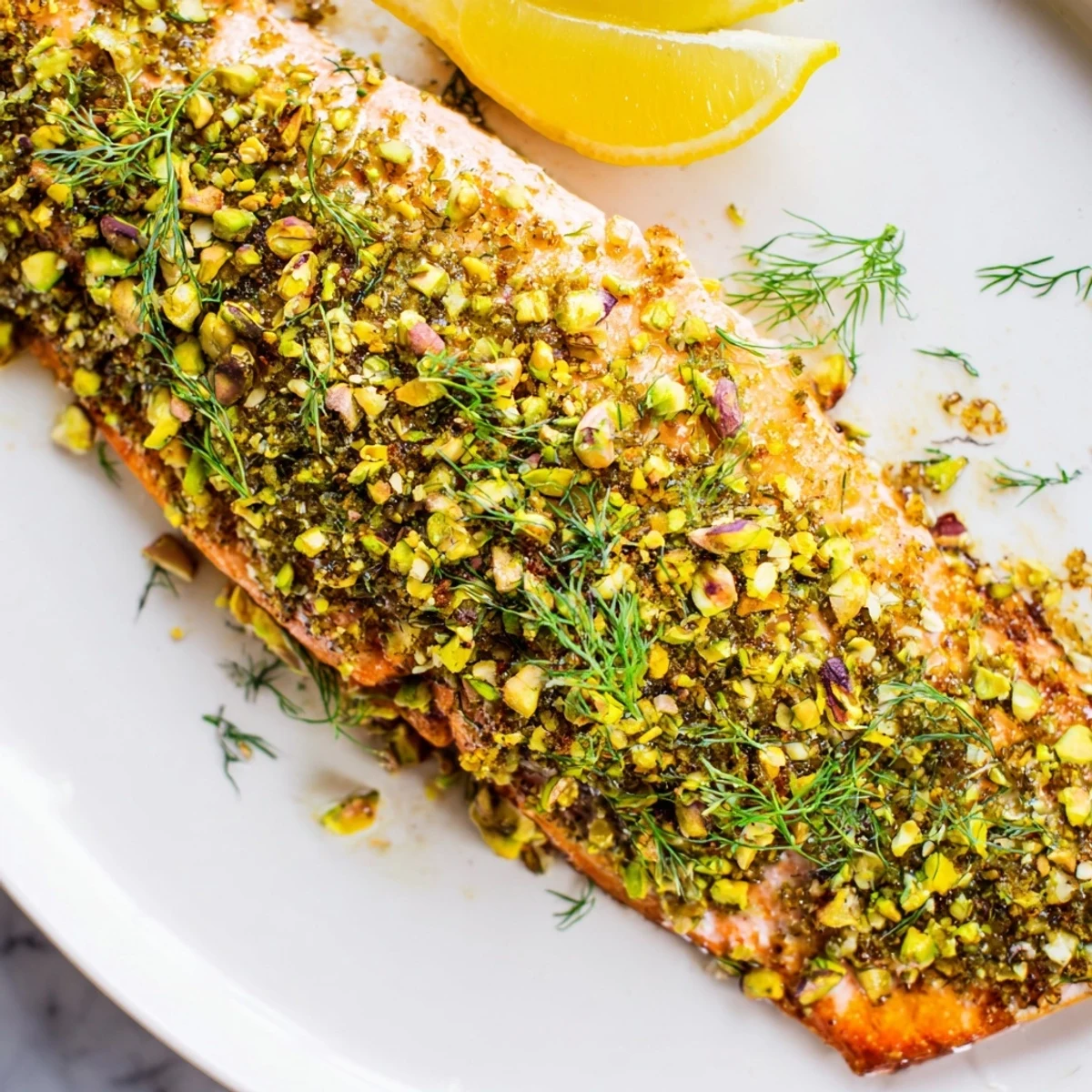
 This is the kind of recipe that makes you feel clever for keeping maple syrup and pistachios in your kitchen at all times. Keep it in your back pocket for the nights when you want dinner to impress without the stress.
Recipe FAQs
- → Can I use frozen salmon fillets instead of fresh?
-
Yes, frozen salmon works well. Thaw it completely in the refrigerator overnight, then pat the fillets thoroughly dry with paper towels before seasoning and glazing to ensure the pistachio crust adheres properly.
- → How do I know when the salmon is fully cooked?
-
The salmon is done when it flakes easily with a fork and reaches an internal temperature of 63°C (145°F). The pistachio crust should be golden brown. Depending on fillet thickness, this typically takes 14 to 18 minutes at 200°C (400°F).
- → What can I substitute for pistachios?
-
Walnuts, pecans, or almonds all make excellent substitutes for pistachios. Chop them roughly to the same size for even browning. If you have a nut allergy, try using toasted breadcrumbs or crushed pretzels for a similar crunchy texture.
- → Can I prepare the glaze and topping ahead of time?
-
Absolutely. The maple-mustard glaze can be mixed and refrigerated for up to 3 days. The chopped pistachio and thyme mixture can also be prepped in advance and stored in an airtight container. This makes weeknight assembly even faster.
- → What side dishes pair well with this salmon?
-
Wild rice, quinoa, or roasted vegetables are all excellent choices. A fresh green salad with a light vinaigrette also complements the richness of the salmon. For wine pairing, a crisp Sauvignon Blanc or a light Pinot Noir works beautifully.
- → Can I use skin-on salmon fillets?
-
Yes, skin-on fillets work well. Place them skin-side down on the baking sheet. The skin helps hold the fillet together and acts as a natural barrier, keeping the fish moist. You can easily remove the skin after baking if preferred.