
 Pin It
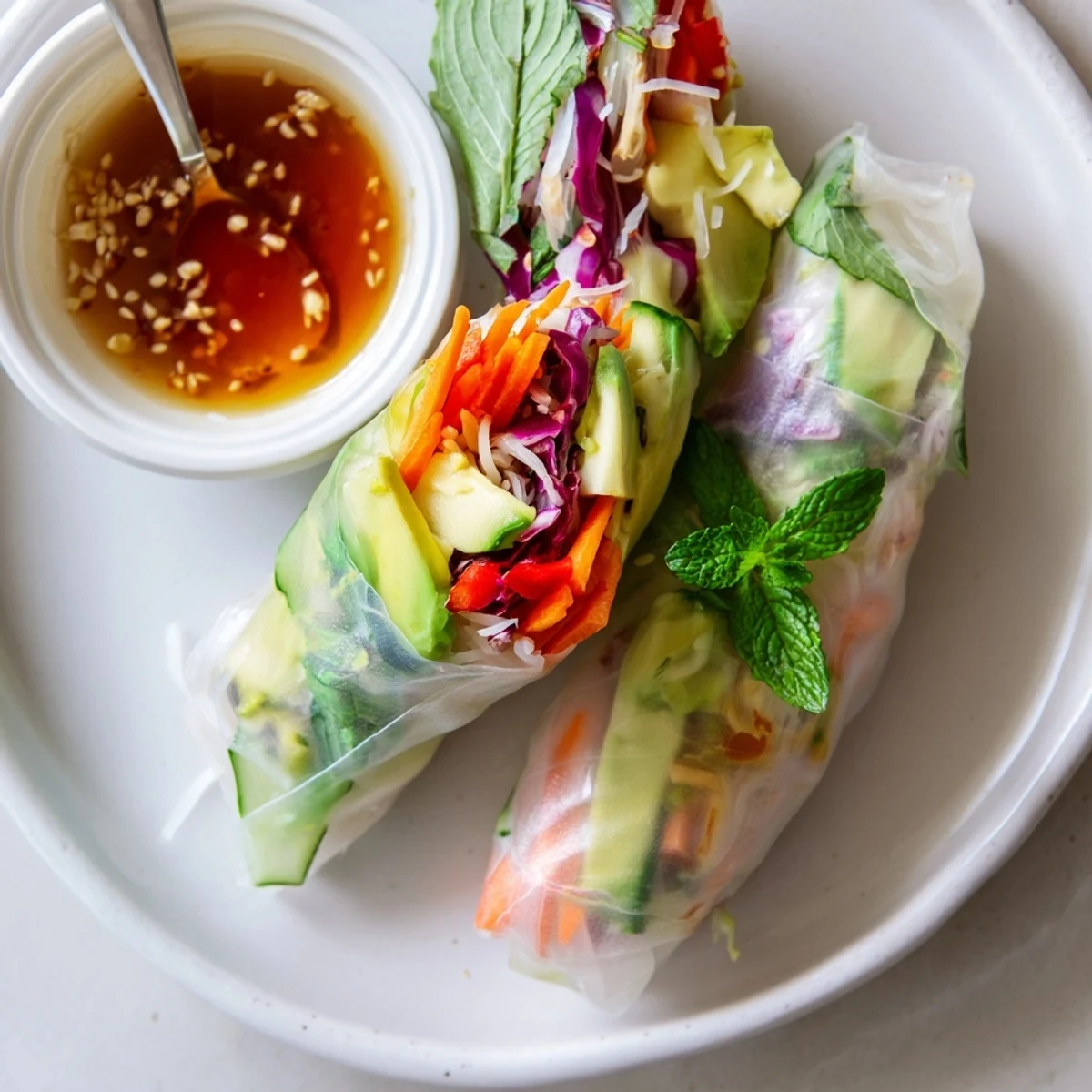
 These gluten-free spring rolls use softened rice paper wrappers filled with rice vermicelli, julienned carrot, cucumber, red cabbage, fresh herbs and sliced avocado. Soak each wrapper 10–15 seconds until pliable, layer fillings along the lower third, fold the sides and roll tightly to seal.
Whisk tamari, rice vinegar, maple syrup, toasted sesame oil, grated ginger and garlic for a bright dipping sauce. Serve immediately; store extras covered with a damp towel in the fridge for a few hours.
The screen door slapped shut behind me as I carried a platter of these spring rolls to the back porch, where my friends were arguing about whether a hot dog counts as a sandwich. I set them down without ceremony and within minutes the conversation shifted entirely to how something so simple could taste this vibrant. That summer afternoon taught me that the best party food does not try too hard. It just shows up fresh and lets the ingredients do the talking.
I ruined an entire pack of rice paper the first time I tried rolling these because the water was too hot and I left them soaking like laundry. Now I treat the wrappers like delicate fabric and everything clicks.
Ingredients
- 1 medium carrot, julienned: Cut them thin and uniform so every bite has a satisfying crunch rather than a chunky interruption.
- 1/2 cucumber, julienned: English cucumbers work best here because the fewer seeds mean less water making your rolls soggy.
- 1 red bell pepper, julienned: The sweetness balances the earthy cabbage and adds a bright slash of color.
- 1 cup red cabbage, thinly shredded: This is what makes the rolls look jewel toned when you hold them up to the light.
- 1 avocado, sliced: Add this last during assembly so it stays in a neat layer and does not smear everywhere.
- 1 cup fresh mint leaves: Do not skip the mint because it is the secret that makes people ask what is in these.
- 1 cup fresh cilantro leaves: Together with mint, cilantro creates a flavor that feels like a cool breeze on a warm day.
- 8 gluten free rice paper wrappers: Check the packaging carefully since not all brands are certified gluten free.
- 100 g rice vermicelli noodles: These give the rolls substance without heaviness and soak up the dipping sauce beautifully.
- 3 tbsp gluten free soy sauce or tamari: Tamari has a rounder, richer flavor that makes the sauce taste deeper.
- 2 tbsp rice vinegar: The gentle acidity wakes up every flavor in the bowl.
- 1 tbsp maple syrup or honey: A little sweetness rounds the sharp edges of the ginger and garlic.
- 1 tsp toasted sesame oil: This tiny amount transforms the sauce from homemade to restaurant quality.
- 1 tsp grated fresh ginger: Fresh ginger grated on a microplane melts into the sauce in a way dried powder never will.
- 1 clove garlic, minced: Smash it flat before mincing to release the most flavor.
- 1 tbsp chopped peanuts (optional): Leave these out for nut free gatherings and no one will miss them.
Instructions
- Soften the noodles:
- Cook the rice vermicelli according to the package directions, then drain and rinse under cool water so they stop cooking and separate easily.
- Prep your workstation:
- Julienne and slice all vegetables, then arrange everything on a large platter or cutting board so you can work quickly once you start rolling.
- Wake up the rice paper:
- Filled a wide shallow bowl with warm water and dip one wrapper at a time for about ten seconds until it feels like a soft cloth but still holds its shape.
- Build the roll:
- Lay the softened wrapper flat, then place a modest handful of noodles, vegetables, and herbs across the lower third, keeping everything tight and compact.
- Roll with confidence:
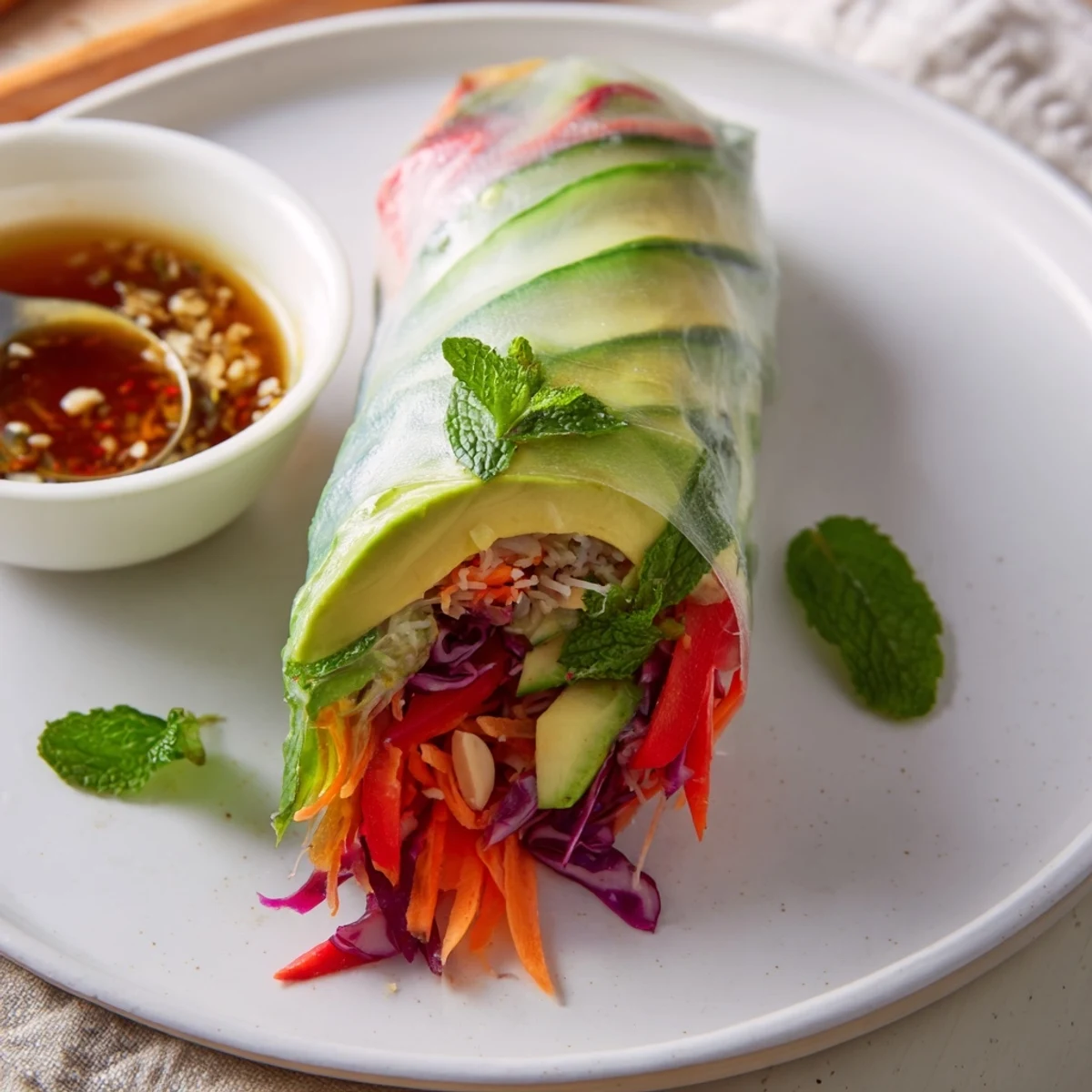
- Fold the left and right sides inward over the filling, then roll from the bottom up like a snug burrito, tucking gently as you go.
- Whisk the dipping sauce:
- Combine tamari, rice vinegar, maple syrup, sesame oil, ginger, garlic, and peanuts if using in a small bowl and stir until everything dissolves into one cohesive sauce.
- Serve right away:
- Arrange the rolls on a plate with the sauce in a small bowl alongside them and watch how quickly the platter empties.
 Pin It
 My neighbor once stood in my kitchen holding a spring roll up to the window light, turning it slowly like a stained glass panel, and said she had never seen food so pretty she was almost afraid to eat it.
Making Them Your Own
Toss in extra protein like baked tofu, edamame, or chilled shrimp if you want these to stand in as a full meal rather than an appetizer. A drizzle of sriracha folded into the dipping sauce adds a warm kick that cuts through the freshness beautifully. You could also tuck butter lettuce or sunflower sprouts inside for an extra layer of snap.
Storage and Timing
These rolls are at their best within the first hour of making them while the wrappers are still silky and the vegetables are at peak crunch. If you need to store them, wrap each roll individually in a damp paper towel and tuck them into an airtight container in the refrigerator for up to four hours. Beyond that the avocado browns and the wrappers toughen.
Tools That Actually Help
A sharp knife and a steady hand matter more than fancy equipment here, but a julienne peeler will save you time and make your cuts consistent. Keep a clean damp towel on hand to wipe your surface between rolls because sticky spots cause tearing.
- Use the largest bowl you own for soaking the rice paper so the wrappers do not fold against themselves.
- Have all fillings prepped and arranged before you wet the first wrapper because once you start things move fast.
- Always double check that your rice paper and soy sauce are certified gluten free since cross contamination can sneak in.
 Pin It
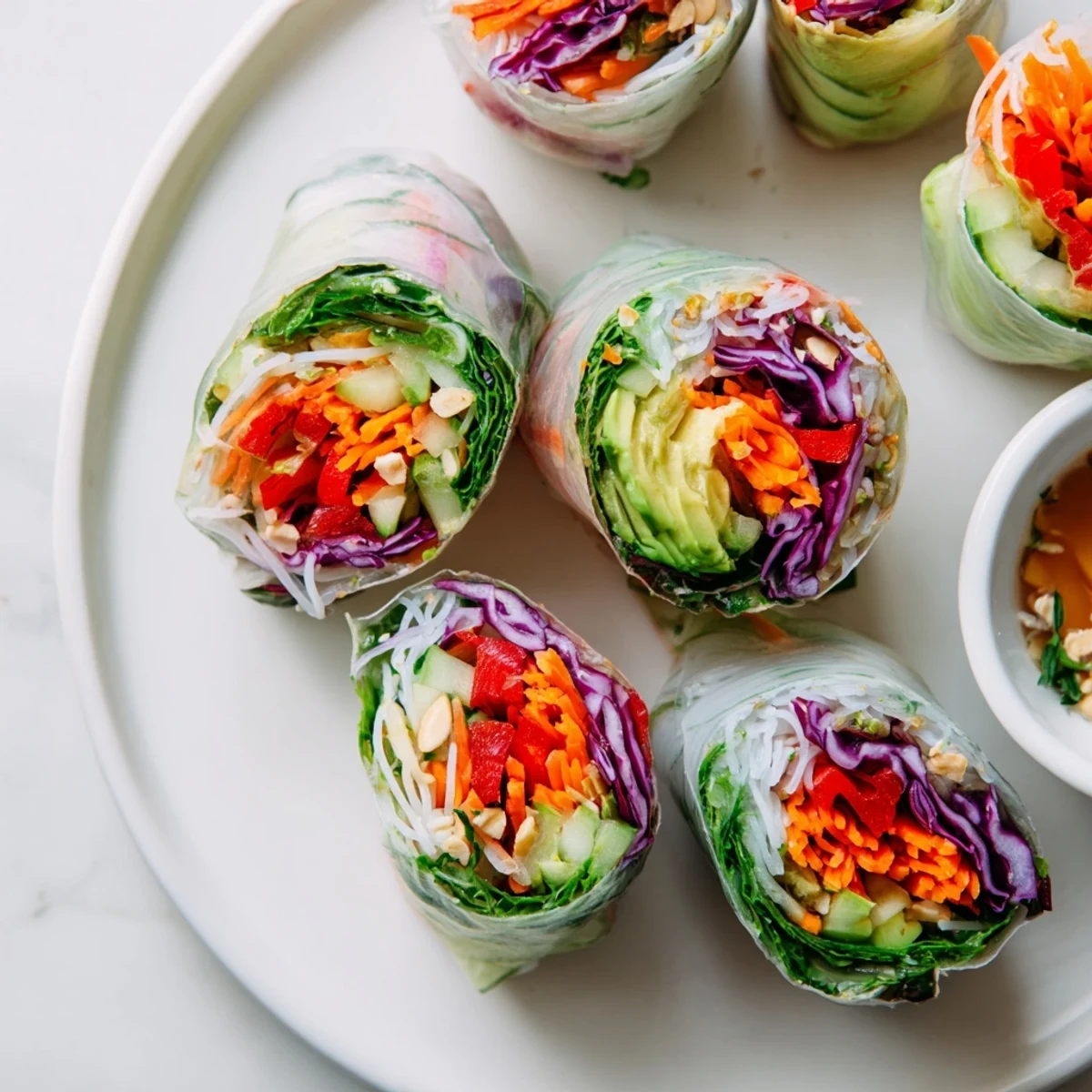
 Some recipes earn a permanent spot in your rotation not because they impress but because they make you feel calm while making them. These spring rolls are that kind of recipe, and the empty platter at the end of every gathering is all the proof you need.
Recipe FAQs
- → How long should I soak rice paper wrappers?
-
Submerge each wrapper in warm water for 10–15 seconds until just pliable. Avoid over-soaking to prevent tearing and a mushy texture.
- → What vegetables work best for rolling?
-
Thin julienne cuts of carrot, cucumber and red bell pepper, plus shredded cabbage and fresh herbs like mint and cilantro, give crunch, color and brightness.
- → How do I keep rolls from getting soggy?
-
Pat vegetables dry, drain noodles well, and assemble tightly. Serve soon after rolling; keep finished rolls covered with a damp towel and refrigerated to preserve texture.
- → Can I add protein to these rolls?
-
Yes—add thin slices of cooked shrimp, grilled chicken or pressed tofu for extra protein. Place protein on the lower third with the noodles and vegetables before rolling.
- → How can I make the dipping sauce nut-free?
-
Omit chopped peanuts and use extra sesame oil or toasted sesame seeds for nuttiness. Ensure tamari or soy sauce and other packaged ingredients are certified nut-free.
- → Any tips for neat, compact rolls?
-
Arrange fillings in a compact line on the lower third, fold the sides snugly over the filling, then roll firmly from the bottom—like a burrito—keeping pressure to seal.