
 Pin It
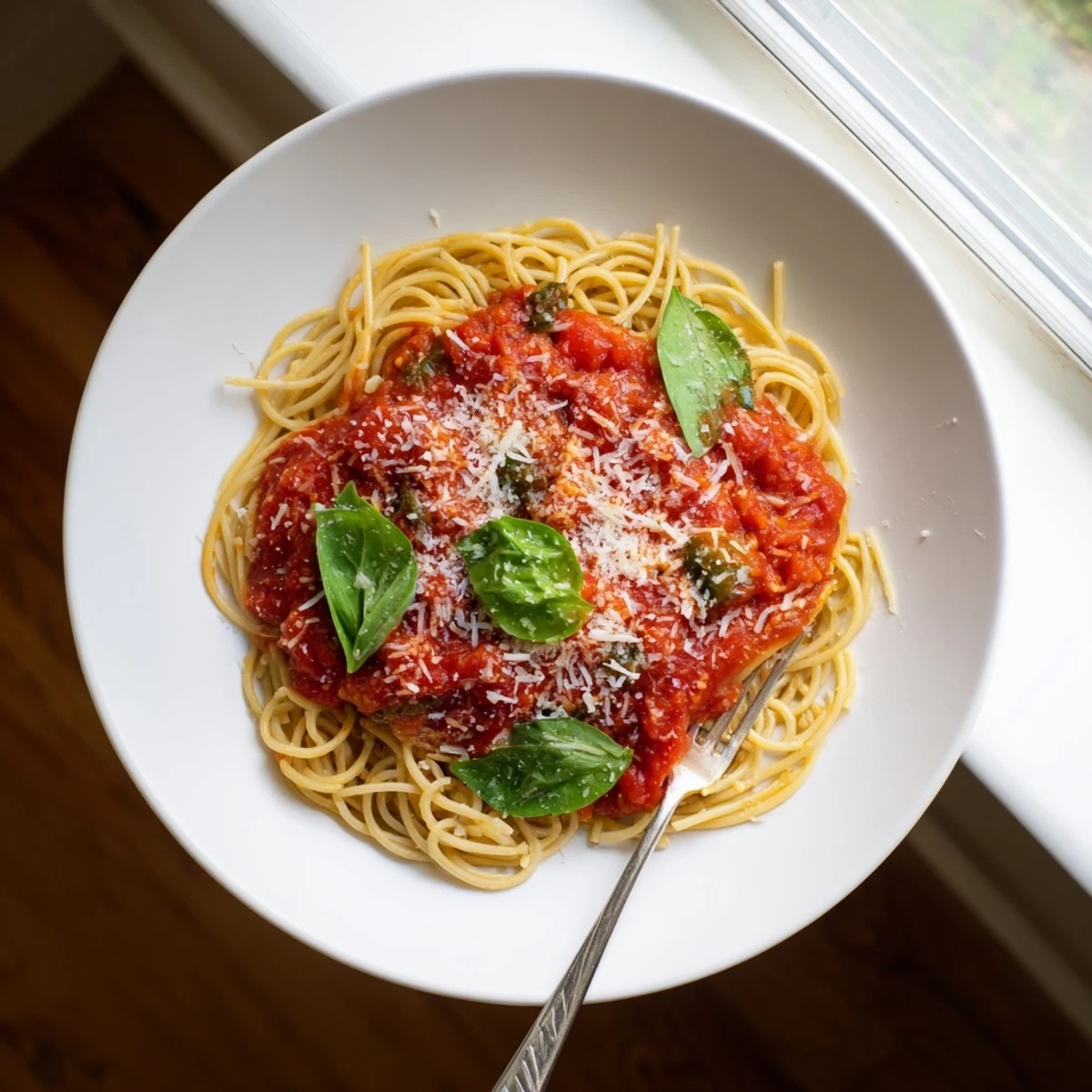
 Enjoy a comforting bowl of pasta coated in a rustic tomato sauce made with olive oil, fresh garlic, and aromatic herbs. This simple Italian classic transforms everyday ingredients into a satisfying meal that comes together in just 30 minutes. The sauce simmers to develop deep flavor while the pasta cooks to perfect tenderness, creating a harmonious combination that's both nourishing and delicious.
The hiss of garlic hitting olive oil is one of those sounds that instantly makes a kitchen feel like home, and nothing in my cooking rotation relies on it more than a simple pot of pasta with tomato sauce. I started making this on busy weeknights when takeout menus lost their appeal and my fridge always seemed to have a can of crushed tomatoes hiding behind the pickles. Thirty minutes later the whole apartment smells like a trattoria and nobody is complaining about dinner.
One rainy Tuesday my neighbor knocked on my door asking what smelled so good, and she ended up staying for dinner with a bottle of wine she had been saving for no particular occasion. We sat at the kitchen counter with steaming bowls and laughed about how the simplest meals always draw people in faster than anything fancy.
Ingredients
- Dried pasta (400 g): Spaghetti is classic but penne holds the sauce beautifully in every bite, so choose whatever shape makes you happy.
- Olive oil (2 tbsp): Use a decent quality one here since it forms the flavor base of the entire sauce.
- Garlic, minced (2 cloves): Fresh is nonnegotiable, and mince it finer than you think you need so it melts into the oil.
- Onion, finely chopped (1 medium): A yellow or white onion works, and the finer you chop the smoother the sauce will be.
- Canned crushed tomatoes (800 g): San Marzano tomatoes are worth the extra dollar for their natural sweetness and low acidity.
- Sugar (1 tsp): This tames the acidity of canned tomatoes and balances the whole dish without making it sweet.
- Dried oregano (1 tsp): Rub it between your palms before adding to wake up the essential oils.
- Dried basil (1 tsp): Added alongside the oregano for a layered herb flavor that simmers into the sauce.
- Salt and black pepper: Season gradually and taste as you go because canned tomatoes vary in saltiness.
- Parmesan cheese (30 g, optional): Freshly grated melts into the hot pasta in a way pre shredded never will.
- Fresh basil leaves: Torn over the top at the very end for a hit of color and brightness.
Instructions
- Boil and cook the pasta:
- Fill a large pot with water, salt it generously until it tastes like mild seawater, and bring it to a rolling boil. Drop in the pasta and stir once to prevent sticking, then cook until just tender with a slight bite at the center, reserving half a cup of the starchy water before draining.
- Build the aromatics:
- While the pasta works, warm olive oil in a large skillet over medium heat and add the chopped onion, stirring until it turns translucent and soft. Slide in the garlic and cook just until you can smell it bloom through the kitchen, about one minute, being careful not to let it brown.
- Simmer the sauce:
- Pour in the crushed tomatoes, sugar, oregano, and basil, then season with salt and pepper to your liking. Let it bubble gently uncovered for about ten to twelve minutes, stirring now and then, until it thickens enough to coat the back of a spoon.
- Marry pasta and sauce:
- Toss the drained pasta directly into the skillet with the sauce, adding a small splash of that reserved pasta water if it needs loosening. Stir everything together over low heat for a minute so each strand or piece gets evenly coated.
- Plate and finish:
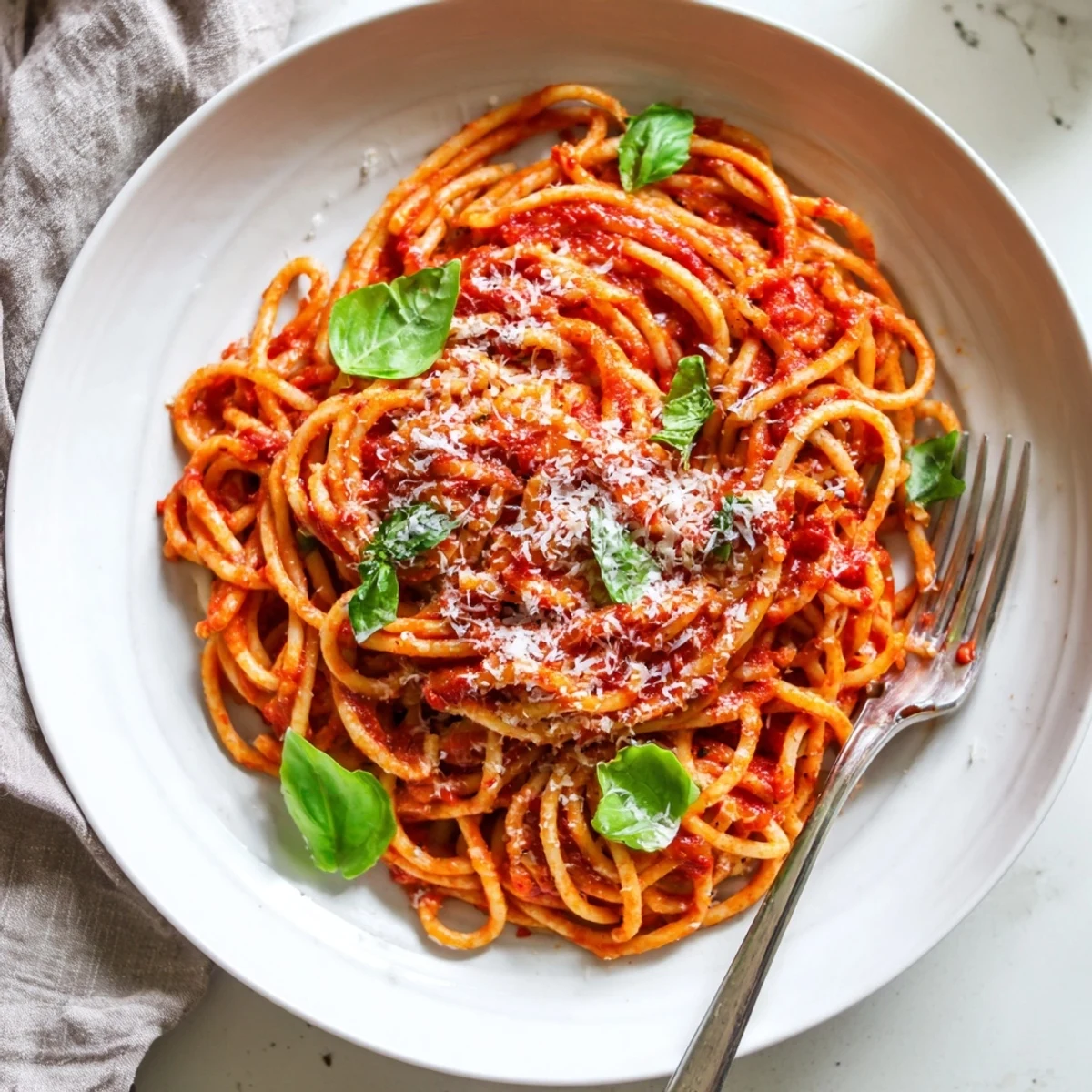
- Transfer to warm bowls right away and shower with grated Parmesan and torn fresh basil leaves. Serve immediately while the cheese is still melting into the hot noodles.
 Pin It
 There is something quietly powerful about a meal that asks so little but gives back so much warmth and comfort to everyone at the table.
Timing Is Everything
Start the sauce the moment you drop the pasta into the water and both will be ready within the same window. If the sauce finishes first simply kill the heat and cover it, and if the pasta finishes first toss it with a drizzle of olive oil so it does not clump while you wait.
Making It Your Own
A pinch of chili flakes stirred into the oil with the garlic changes the whole personality of the dish without adding extra effort. You can also toss in a handful of olives, capers, or wilted spinach at the end depending on what needs using up in your fridge.
Storing and Reheating
Leftovers keep well in an airtight container in the refrigerator for up to three days, though the pasta will absorb some of the sauce overnight. Reheat gently in a pan with a splash of water to bring the sauciness back to life.
- Store pasta and sauce together for the easiest leftovers.
- Add a little water when reheating to revive the original consistency.
- Freeze the sauce on its own for up to three months for a future quick meal.
 Pin It
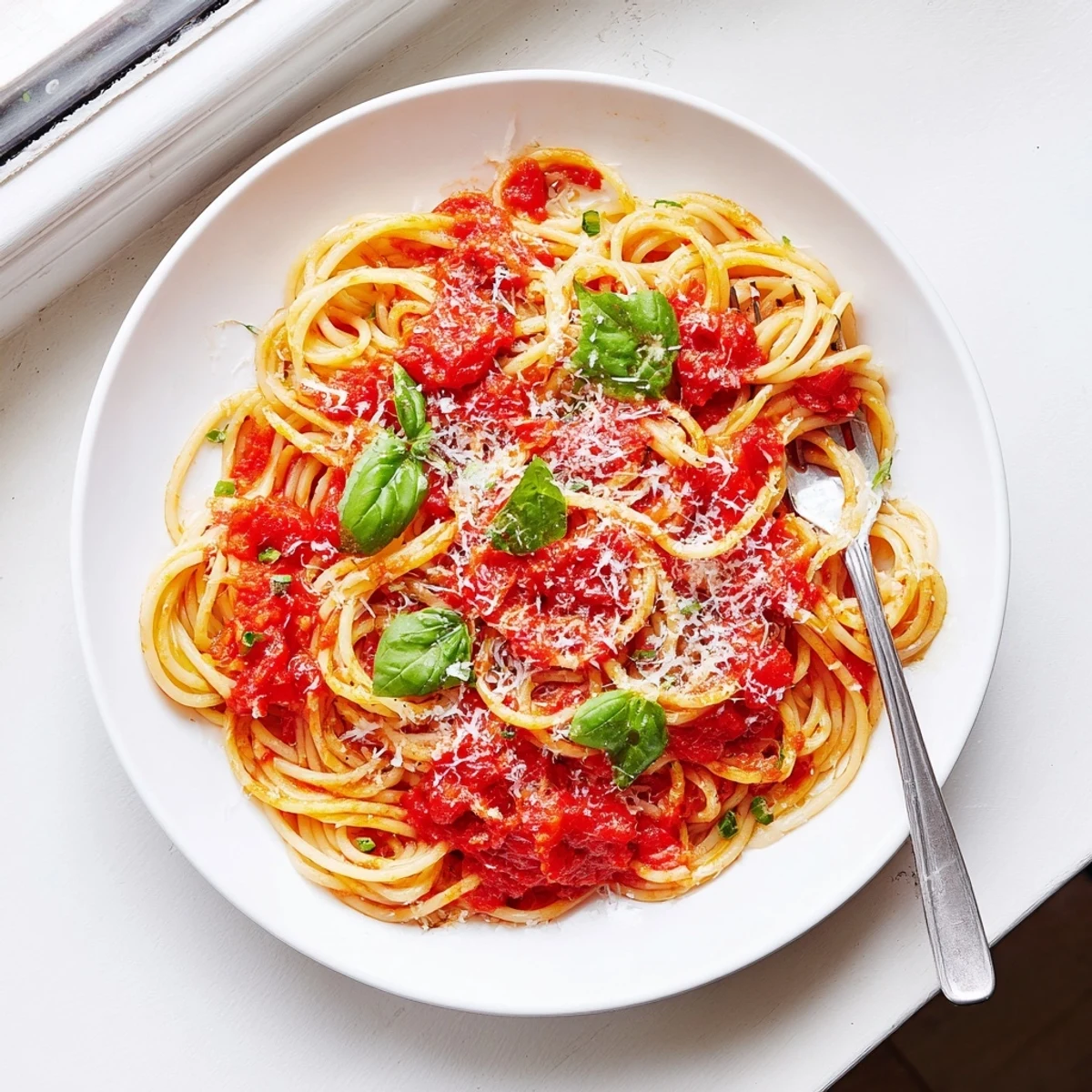
 A pot of pasta with homemade tomato sauce is proof that dinner does not need to be complicated to be deeply satisfying. Keep a can of good tomatoes in your cupboard and you are never far from something wonderful.
Recipe FAQs
- → What type of pasta works best?
-
Spaghetti and penne both pair beautifully with tomato sauce. The sauce clings well to ridged shapes like penne or coats long strands of spaghetti evenly. Choose whichever shape you prefer.
- → Can I use fresh tomatoes instead?
-
Fresh tomatoes work wonderfully when they're in season. Use about 1 kg of ripe tomatoes, blanch and peel them, then crush by hand. You may need to simmer slightly longer to achieve the right consistency.
- → How do I store leftovers?
-
Store cooled pasta in an airtight container in the refrigerator for up to 3 days. Reheat gently with a splash of water to loosen the sauce. The flavors often deepen and improve after resting.
- → Can I make this vegan?
-
Simply omit the Parmesan cheese or replace it with a vegan alternative. The tomato sauce itself is naturally plant-based and full of flavor from the herbs and vegetables.
- → Why add sugar to tomato sauce?
-
A small amount of sugar balances the natural acidity of canned tomatoes, creating a more rounded flavor profile. You can adjust the amount based on your taste preference and the acidity of your tomatoes.