
 Pin It
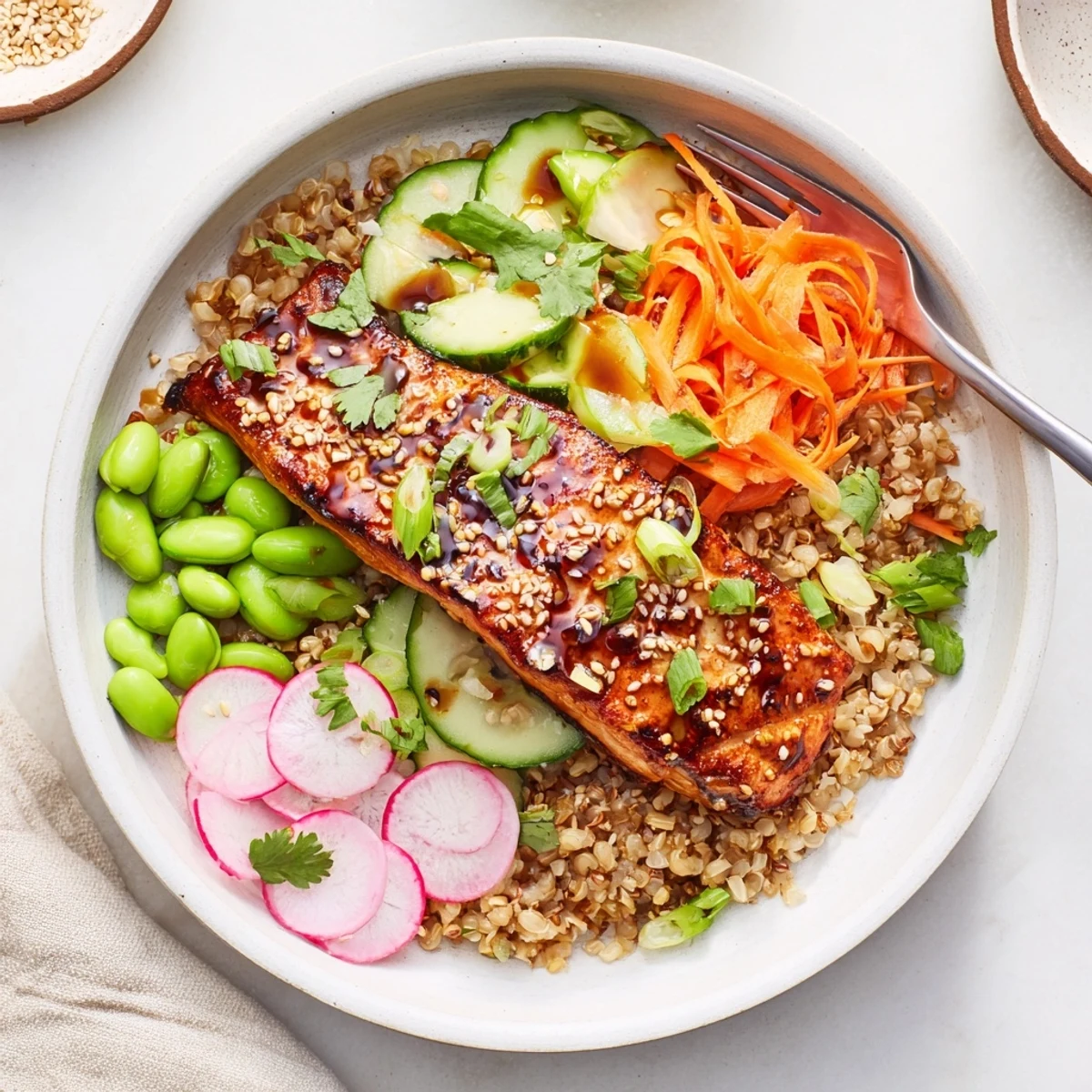
 This Asian salmon grain bowl brings together tender, honey-soy glazed salmon fillets with wholesome grains like brown rice or quinoa for a deeply satisfying meal.
Crisp shredded carrots, cool cucumber, buttery avocado, and protein-rich edamame add vibrant color and texture, all tied together with a bright lime-sesame dressing.
Ready in about 40 minutes, it's a nourishing option for weeknight dinners that doesn't skimp on flavor or presentation.
The sizzle of salmon hitting a hot pan on a Tuesday evening changed my entire approach to weeknight dinners. I had leftover rice, half a cucumber, and a bottle of soy sauce staring back at me from the fridge door. What started as a desperate clean out the fridge meal became the dish my family now requests every single week without fail.
My neighbor walked in once while I was whisking the marinade and immediately assumed I had ordered takeout based on the smell alone. She stood in the kitchen doorway sniffing the air like a cartoon character floating toward a pie on a windowsill. We ended up eating together at the counter with bowls balanced on our knees, barely speaking between bites.
Ingredients
- Salmon fillets: Four skinless fillets around 150 g each give you perfect portions and cook evenly under the broiler.
- Soy sauce: Use a good quality one here because it is the backbone of both the marinade and the dressing.
- Honey: This is what creates that gorgeous caramelized crust on the salmon when the heat hits it.
- Sesame oil: A little goes a long way and adds a deeply nutty, toasty aroma that ties everything together.
- Rice vinegar: Brings just enough brightness to balance the salty and sweet elements in the glaze.
- Fresh ginger: Grate it finely so it melts into the marinade rather than leaving chunky bits on the fish.
- Garlic: One clove minced small keeps the flavor present but not overpowering.
- Sriracha: Totally optional but a teaspoon adds a gentle warmth that makes the whole bowl more interesting.
- Brown rice, quinoa, or grain blend: Pick whichever you have on hand because they all work beautifully as the base.
- Shredded carrots: They add a satisfying crunch and a pop of orange that makes the bowl look as good as it tastes.
- Cucumber: Thinly sliced so every bite has a cool, refreshing contrast to the warm salmon.
- Edamame: Cooked and shelled, these bring plant protein and a buttery texture to each mouthful.
- Avocado: Sliced just before serving so it stays green and creamy on top of your bowl.
- Radishes: Their peppery bite cuts through the richness of the salmon in the best possible way.
- Scallions and sesame seeds: The finishing touch that makes everything look like it came from a restaurant kitchen.
- Fresh cilantro or mint: Optional but a few leaves scattered on top add a fresh, herbal note that wakes up all the flavors.
- Lime juice: Used in the dressing to brighten the whole bowl with a hit of acidity.
Instructions
- Whisk the marinade together:
- Combine soy sauce, honey, sesame oil, rice vinegar, grated ginger, minced garlic, and sriracha in a small bowl until the honey dissolves and everything looks glossy and unified.
- Coat the salmon:
- Lay the fillets in a shallow dish and pour the marinade over them, tipping the dish so every surface gets coated. Let them sit for 15 to 20 minutes while you handle everything else.
- Cook the grains:
- Rinse your chosen grain, then combine with water and salt in a saucepan, bring it to a boil, reduce the heat, cover, and simmer until tender and the water is absorbed. Fluff with a fork and keep warm.
- Broil or grill the salmon:
- Preheat your broiler or grill to medium high, place the marinated fillets on a lined tray, and cook for 6 to 8 minutes until the tops are deeply caramelized and the fish flakes easily with a fork.
- Whisk the dressing:
- Stir together soy sauce, rice vinegar, lime juice, honey, and toasted sesame oil in a small bowl until smooth and pourable.
- Build the bowls:
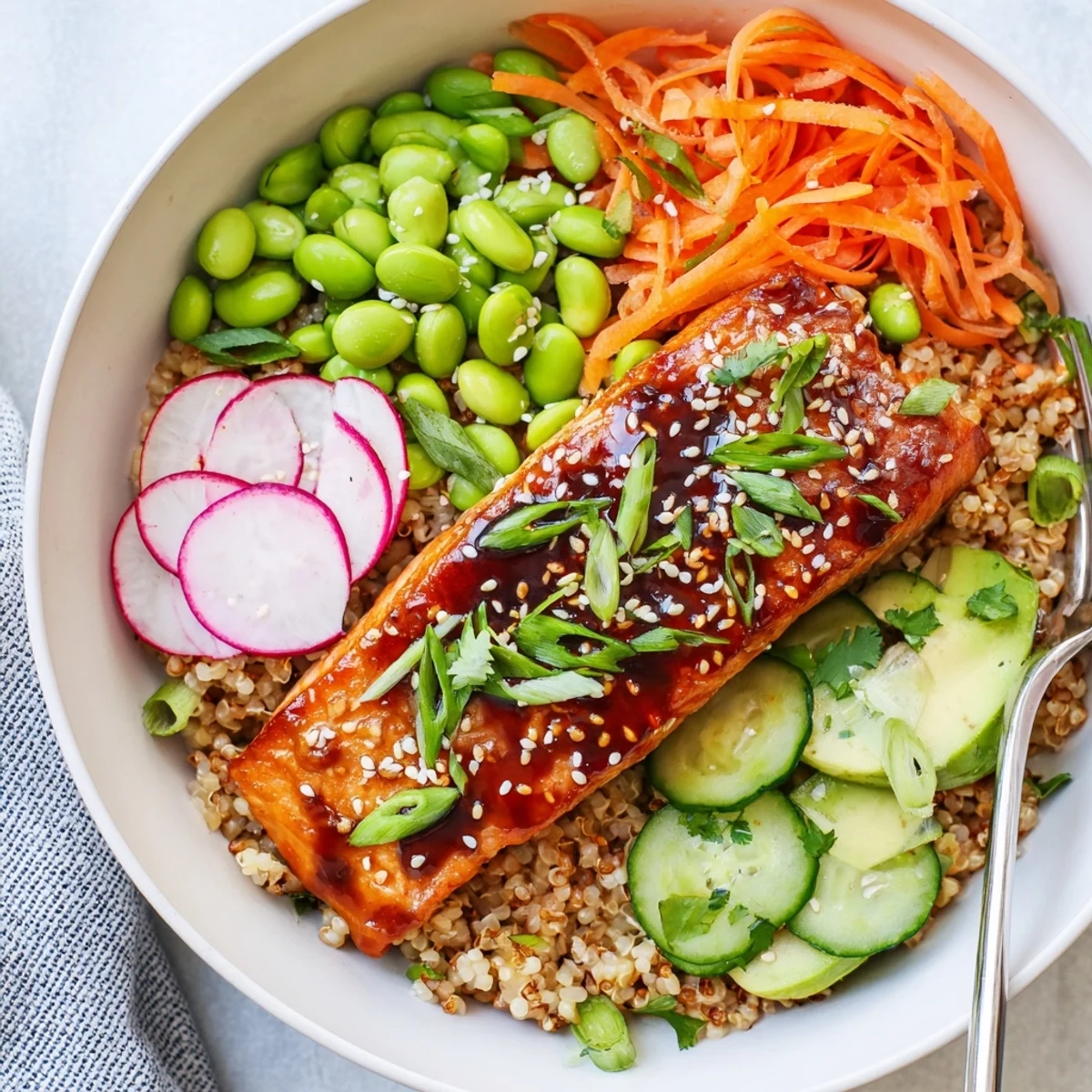
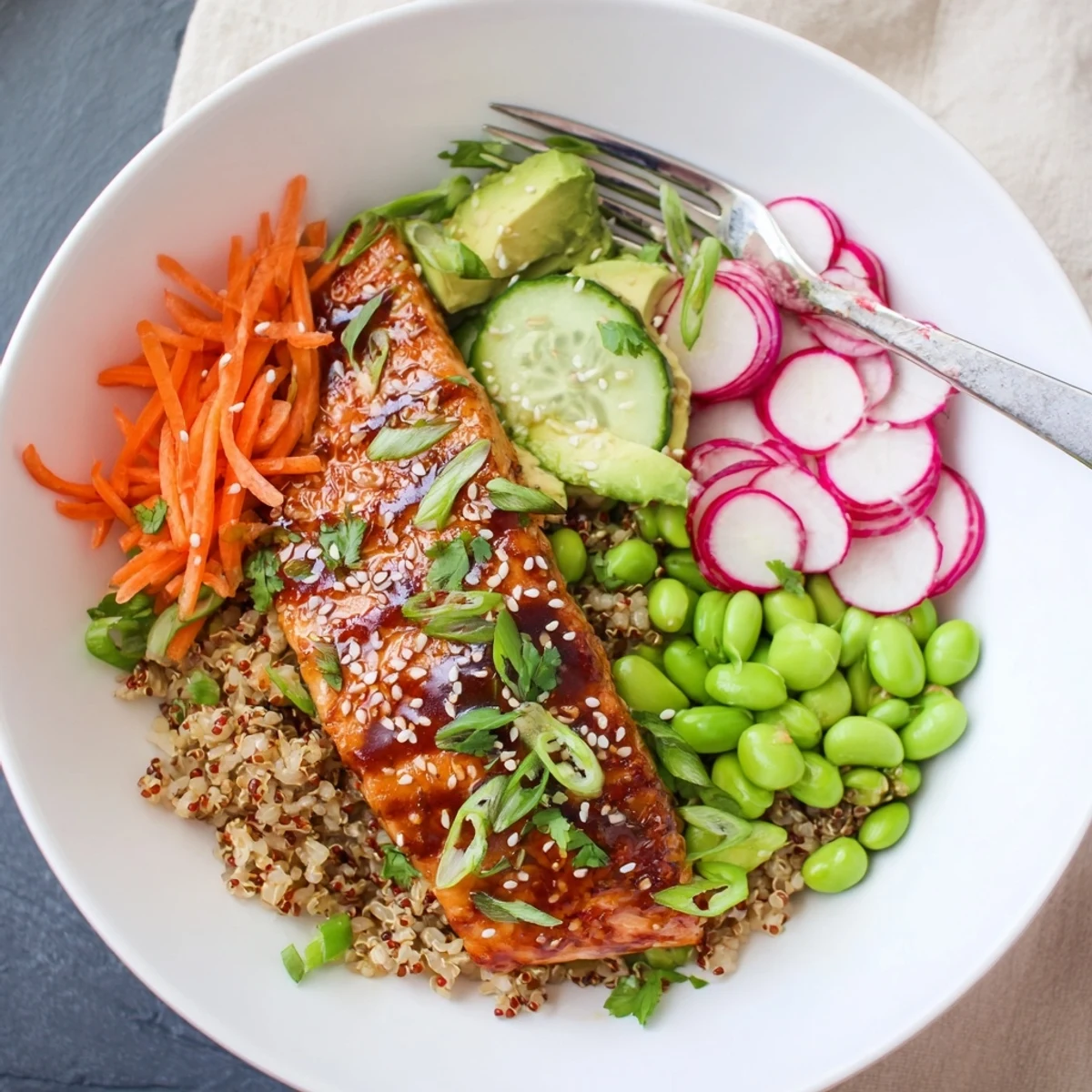
- Divide the warm grains among four bowls and arrange the carrots, cucumber, edamame, avocado, and radishes in clusters around each mound of grains.
- Finish and serve:
- Set a salmon fillet on top of each bowl, drizzle generously with the dressing, and scatter with scallions, sesame seeds, and fresh herbs before serving right away.
 Pin It
 There is something deeply satisfying about assembling a bowl like this, arranging each vegetable in its own little quadrant, like painting a canvas you get to eat. It turns an ordinary weeknight into a small act of care for yourself and whoever sits at your table.
Swaps and Substitutions
Quinoa, farro, or even a wild rice blend will step in beautifully for brown rice if you want a different texture or faster cooking time. If avocado is not available or not your thing, double the edamame or toss in some blanched snap peas for crunch. My friend makes a vegetarian version with thick slabs of teriyaki tofu and swears it is just as satisfying as the original.
What to Serve Alongside
A glass of crisp, dry Riesling alongside this bowl is honestly a pairing worth planning your whole evening around. On nights when wine feels like too much, a pot of warm green tea is a soothing companion that echoes the earthy notes in the sesame and soy. I have also been known to start the meal with a simple miso soup, turning dinner into a mini feast.
Making It Your Own
The real magic of a grain bowl is that it forgives substitutions and welcomes experimentation once you understand the basic structure. Think of the recipe as a framework rather than a rulebook and trust your instincts with what looks good at the market.
- Try pickled red onions or quick pickled jalapeños for an extra punch of tang and heat.
- A squeeze of extra lime over the assembled bowl right before eating wakes up every flavor at once.
- Always taste the dressing on its own and adjust the balance of salty, sweet, and sour before drizzling it over everything.
 Pin It
 However you build your bowl, I hope it becomes one of those meals you reach for on the nights when you need something nourishing without a fuss. The best recipes are the ones that feel like yours.
Recipe FAQs
- → Can I use frozen salmon fillets instead of fresh?
-
Yes, frozen salmon works well. Thaw it completely in the refrigerator overnight and pat dry before marinating to ensure the glaze adheres properly and the fish cooks evenly.
- → What grain works best as the base?
-
Brown rice, quinoa, or farro all work beautifully. Brown rice provides a chewy, nutty foundation, while quinoa cooks faster and adds extra protein. A blend of grains offers the most interesting texture.
- → How do I know when the salmon is perfectly cooked?
-
The salmon is done when it flakes easily with a fork and reaches an internal temperature of 145°F. Under the broiler, this typically takes 6–8 minutes depending on thickness. The glaze should be caramelized and slightly charred on top.
- → Can I meal-prep this grain bowl ahead of time?
-
Absolutely. Cook the grains and prepare the vegetables up to two days in advance. Store each component separately in airtight containers. Cook the salmon fresh when ready to serve for the best texture and flavor.
- → Is there a gluten-free version of this dish?
-
Yes. Simply replace the soy sauce with tamari, which is naturally gluten-free. Also verify that your sriracha and rice vinegar labels are gluten-free, as some brands may contain wheat-based additives.
- → What can I substitute for salmon to make it vegetarian?
-
Extra-firm tofu pressed and cubed makes an excellent substitute. Marinate it the same way and pan-fry or broil until golden. Tempeh is another great option with a denser, nuttier bite that pairs well with the Asian glaze.